Museum Cleaning in Linz
Museum Cleaning in Linz
A written schedule of services, the same registered team, and the price in writing after a free site visit.
02. What Museum Cleaning at Bling Bling covers
The scope of work in Linz at a glance — what the contract says and what actually happens on site.
Dust management and the dirt barrier
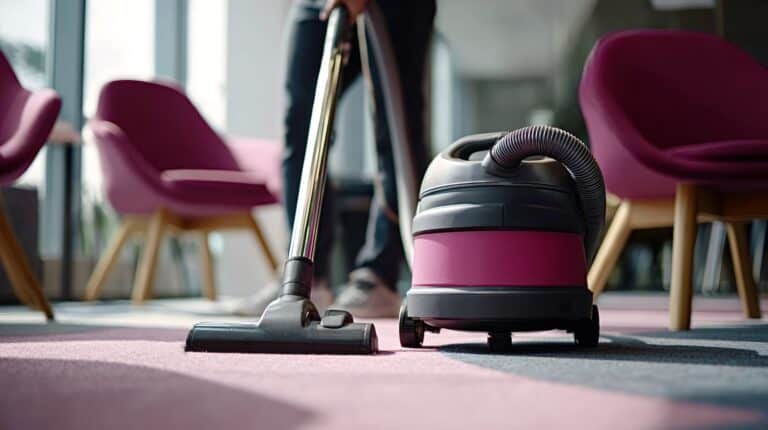
Vacuums with fine filtration, working from the top down, no sweeping and no blowing off. In the entrance area the barrier matting zones are checked and cleaned, because that is where most of the mineral matter brought in is held.
Public areas and ancillary rooms
Foyer, ticket desk, shop, cloakroom, sanitary areas, lecture room and stairs run on a cycle of their own, mostly before opening and after events. This is the area with the highest footfall and therefore with the greatest input of dust.
Continuity of personnel and records
The people who come are assigned by name and trained by the institution, with a formal key arrangement and knowledge of the alarm zones. Every visit is documented with a date, and with photographs per room on request.
Store, repository and mobile shelving
Floor areas, shelf decks where released, mobile shelving rails and skirting zones are vacuumed and the rails cleared, so that the installation does not run against foreign objects. The store gets a cycle of its own, because more of the collection lies there than in the exhibition rooms.
Supporting the monitoring rather than obstructing it
Sticky and pheromone traps stay where they are, are not vacuumed up and not moved; their positions are recorded in the room list. Cleaning is directed at where insects find food and harbourage: joints, skirting boards, the underside of case plinths, crevices behind furniture.
Ventilation, outlets and the outside of climate plant
Supply and extract grilles, ceiling outlets, the outside of recirculation units and the surfaces beneath them are vacuumed on a cycle, because that is where dust is carried into the room from. Filters and plant technology stay with the building services department; we report condition and anything noticed.
Exhibition spaces in converted industrial buildings such as the Tabakfabrik and in the port area mean large halls, exposed concrete, steel and open ceiling structures — there, high-level dust is the main subject rather than the floor area. The iron-oxide-bearing fine dust from the industrial setting settles as a reddish film on high-level surfaces, roof lights and the tops of display cases and may only be taken up dry, because rubbing it damp draws smears and scratch marks. Stores in basements near the Danube have to be checked for moisture and flood conditions before any collection moves there.
03. Museum Cleaning: Bling Bling vs. the competition
In a museum the most important instruction is not how cleaning is done but where it is not — and a cleaning error there becomes a conservation case that cannot be undone. Added to that, the cleaning itself intervenes in the preservation of the collection: dust stirred up settles on objects, and every litre of water brought in alters the humidity of the room air for a time. We work with a written release plan, with the same trained team and with limited quantities of moisture from pre-prepared covers. We give the cost framework after the inspection with the institution, because opening hours, proximity to objects and floor materials determine the effort involved. In Linz, Bling Bling works with the same core team that knows the building.
| Criterion | Bling Bling | Budget provider | Large corporation |
|---|---|---|---|
| Cleaning staff properly registered | ✓ all | ✗ often not | ✓ |
| Permanently employed core team | ✓ always | ✗ chain of subs | ~ mixed |
| €3m public liability | ✓ documented | ✗ minimal | ✓ higher |
| Mopping technique with a limited quantity of moisture | ✓ pre-prepared covers | ✗ bucket and mop | ~ depending on site management |
| The same individuals, trained by name | ✓ with a cover arrangement | ✗ changing staff | ~ relief staff per shift |
| Release plan for object and non-object in writing | ✓ room by room | ✗ verbally | ~ |
| RKI/VAH-listed agents, HACCP trained | ✓ all | ✗ | ~ |
| Trained staff, proof on request | ✓ | ~ | ✓ |
| Named contact person | ✓ direct | ~ | ✗ call centre |
| Multilingual (DE/EN and five more) | ✓ | ~ | ~ DE/EN |
| Before/after photo documentation | ✓ always | ✗ | ~ surcharge |
| Rectification within 48 h included | ✓ in writing | ✗ | ~ |
04. Who relies on Bling Bling
Clients who have worked with the same team for years — from fitness clubs and showrooms to high-rise buildings.
05. How to book your Museum Cleaning
Six steps from enquiry to sign-off in Linz.
Enquiry
Through the form on this page. Reply within 48 hours on working days.
Site visit
Free and without obligation. We look at surfaces, access and time windows — without that there is no price.
Written quotation
A fixed cost framework after the visit, with a schedule of services and contract terms.
Appointment
The date you want, outside business hours, at weekends or on public holidays if required.
Execution
A fixed team, photo documentation before and after, sign-off on site.
Rectification
If something is not right it is put right within 48 hours — no argument and no extra cost.
06. 10 reasons for Museum Cleaning from Bling Bling
What a cleaning company has to be measured against — and which of it can be verified.
1In business since 2014
A family firm, not a franchise and not a broker — whoever quotes also carries out the work.
2Registered core team
Permanently employed and properly registered. No chain of subcontractors where nobody is liable at the end.
3The same people every time
The team knows the building, the access and the routines. Cover is arranged and named in advance.
4€3m public liability
Personal injury, property and financial loss covered; the certificate is attached to the quotation.
5RKI/VAH-listed agents, HACCP
Listed agents, trained staff, a cleaning and disinfection plan for each building.
6Multilingual
German, English and five further languages — the briefing gets through.
7No price without a site visit
A flat price over the phone rarely holds. After the visit the framework is set out in writing. A monthly flat rate applies to weekly recurring cleaning; one-off and deep cleans by effort - hourly, per square metre or flat - travel included.
8Dated proof
Record of each visit and photo documentation, reported monthly.
9Work at height in an operating building from our own hand
Tall halls, cornices, light courts and roof lights we reach with rope access or scaffolding using our own team, with tools secured and a restricted zone beneath the working position.
10The institution's briefing is planned for
Before work begins, those responsible for the collection walk the rooms with the team and set the limits. We allow for that time, rather than improvising it on the first evening.
07. Museum Cleaning in 4 more cities
Bling Bling works in Vienna, Graz, Linz, Salzburg and Klosterneuburg — with its own staff on site, not with subcontractors hired in.
08. Museum Cleaning for 5 typical situations
The same service looks different depending on the occasion — these five situations come up most often.
Before an opening or a private view
Glass surfaces, display cases from the outside, floors and foyer in one pass the evening before, so that nothing is moved in the morning.
After events in the building
Receptions, concerts and guided tours bring drink marks, seating and considerably more input onto the floors. That is a visit of its own and not a pass within the cycle.
Maintenance periods or closing days
During the break, floors are deep-cleaned, ventilation grilles and high-level surfaces vacuumed and barrier matting zones renewed.
After construction or building services work
Fine mineral dust from drilling and sanding is abrasive and distributes itself through the ventilation. Here the follow-up is done with extraction, not with a broom.
Before a loan is returned and a courier visit
When a courier collects an object, the room is made dust-free beforehand and the climate kept steady. The work is done the day before, so that nothing is stirred up on the day itself.
★ Worth knowing
What is often misjudged about Museum Cleaning
Said up front, on the facts — not after the invoice.
Cleaning is the first line against museum pests
Clothes moths, fur and larder beetles, silverfish and booklice live on keratin, glue, starch and paper — that is, on what is left lying in crevices, under plinths, behind furniture and in carpet edges. That is exactly why cleaning comes before control in every integrated pest management concept: whoever vacuums up the food source needs less chemistry, and chemistry is not an option on collection objects in any case. Traps are measuring instruments and not soiling, which is why they stay where they are and their positions are documented. Whatever we vacuum up goes into closed bags and not into a vacuum that is opened again in the store the next day.
Textile surfaces are both a dust reservoir and a dust source
Museum carpet, plinth coverings and fabric-covered walls take up particles and release them again with every step and every draught; the mineral input also sits in the pile, where it acts as an abrasive when brushed. A brush roller tears open covering fabric and leaves a visibly altered pile, while wet methods leave tidemarks and draw dirt up from the depth. The correct approach is slow, repeated vacuuming with an upholstery nozzle and good airflow, in crossing directions and without pressure. If a mark cannot be lifted that way, it stays and is reported — the decision about treatment lies with the institution.
Light fittings and UV films are not polished but dusted
Spotlights and recessed fittings are only worked on with the power isolated and once cooled: halogen and metal halide lamps are hot, and a cloth on the reflector alters the distribution of light in the room. Light protection and UV filter films on windows and display cases are soft plastic laminates — cleaners containing ammonia or alcohol, abrasive pads and blades destroy them, and with them the protection of the objects against radiation. A third point is often overlooked: dust on the lens, filter pane and shield lowers the illuminance gradually, which is why institutions readjust their light values without knowing the cause. We dust dry, change no positions and report defective filters rather than replacing them.
Reviews from clients in Vienna, Graz, Linz, Salzburg and Klosterneuburg — grown since 2014, not bought. The figure is taken from the Google profile daily.
●. Written references from established clients
The original letters are available for inspection at the office.
★ 27.08.2024
Kindernothilfe Österreich
„Straightforward and professional to work with. We recommend Bling Bling for office cleaning work.“
— Mag. Gottfried Mernyi, CEO
★ 22.10.2022
Fit/One Österreich
„Satisfied for three and a half years. Cleaning is brisk, faultless, hygiene standard excellent.“
— Christian Lang
★ 06.11.2018
M1 Med Beauty / clinics
„Quality, reliability and adherence to the quotation for clinics and practices. Recommended without reservation.“
— Management
★ 10.12.2018
Artex Museum Services
„Final cleaning of display cases, entirely satisfactory, short-notice jobs. Recommendation guaranteed.“
— Site management
★ Architecture practice
Arch. DI Kiener & Dazinger
„Construction, final, stairwell and historic balustrade cleaning. Warmest recommendation.“
— Office management
●. Museum Cleaning in context
Museum Cleaning rarely stands alone. These services are most often booked alongside it:
Regular cleaning afterwards
Maintenance Cleaning in Linz, Deep Cleaning in Linz, Intensive Cleaning in Linz.
Glass and facade
Window Cleaning in Linz, Glass Cleaning in Linz, Facade Cleaning in Linz.
Furniture and floor care
Upholstery Cleaning in Linz, Carpet Cleaning in Linz, Floor Cleaning in Linz.
Sectors with their own rules
Medical Practice Cleaning in Linz, Practice Cleaning in Linz, Laboratory Cleaning in Linz.
Building and management
Stairwell Cleaning in Linz, Garage Cleaning in Linz, Property Care in Linz.
Anyone commissioning Museum Cleaning usually needs more than a single appointment. Everything from one source means one contact person, one contract, one combined invoice — and the same team that already knows the building.
●. Frequently searched — Museum Cleaning
These are the most common searches for this service. Every point is answered on this page.
●. Frequently asked questions about Museum Cleaning in Linz
What does Museum Cleaning cost?
There is no price before the site visit, and a figure given over the phone rarely holds. We look at surfaces, access and time windows, and then the cost framework is set out in writing with a schedule of services. What changes the price: the area, the frequency, the condition at handover and the time of day the work is done. Two rules apply everywhere: a monthly flat rate is only offered for recurring cleaning at least once a week, including stairwells. One-off jobs, first cleans and deep cleans are billed by effort - depending on the service by the hour at a higher rate, by square metre or as a flat price - and travel time there and back counts.
Is the site visit really free?
Yes, free of charge and without obligation. It is the only way to quote seriously, so we treat it as part of the offer, not as a service to be paid for.
Does the same person come every time?
Yes. The team is permanently employed and knows the building, the access arrangements and the routines. Cover is arranged in advance and named, and it works from the building log, not from a verbal handover.
Is your staff properly registered?
All of them, with social insurance. No chain of subcontractors in which nobody is liable at the end. Proof is provided on request.
What insurance is in place?
Public liability of €3m, covering personal injury, property damage and financial loss. The certificate is attached to the quotation.
What happens if something is not right?
It is put right within 48 hours, in writing, at no extra cost. Measured against the schedule of services and a joint inspection, not against an impression.
Can you work outside business hours?
Yes — early, late, at weekends or on public holidays. In occupied buildings, daytime cleaning in sections is often the better option, because the client sees the work and can raise anything immediately.
Do I have to provide materials or a room?
Materials and equipment we bring. What helps is a lockable store with a slop sink, space for the trolley and somewhere for pads to dry — damp pads in a closed bag are the most common source of smell in an otherwise clean building.
What notice period applies?
The contract is terminable monthly. There is no minimum term and no automatic extension by the year.
Do you also work in English?
Yes — German, English and five further languages. The briefing gets through, which matters more on site than it sounds.
Which documents do I get?
A schedule of services with frequencies, a dated record of each visit, photo documentation before and after, and a monthly report.
How quickly can you start?
Usually within a few working days of the quotation being accepted. Short-notice jobs are most readily possible in Vienna, because travel times within a district are short.
Request a quote for Museum Cleaning in Linz a quote
Site visit free of charge and without obligation. Reply within 48 hours on working days. You can attach photos or a floor plan right away — that makes the visit shorter.
We need the fields marked with * to arrange an appointment.